

The article title is click bait here is the full article:
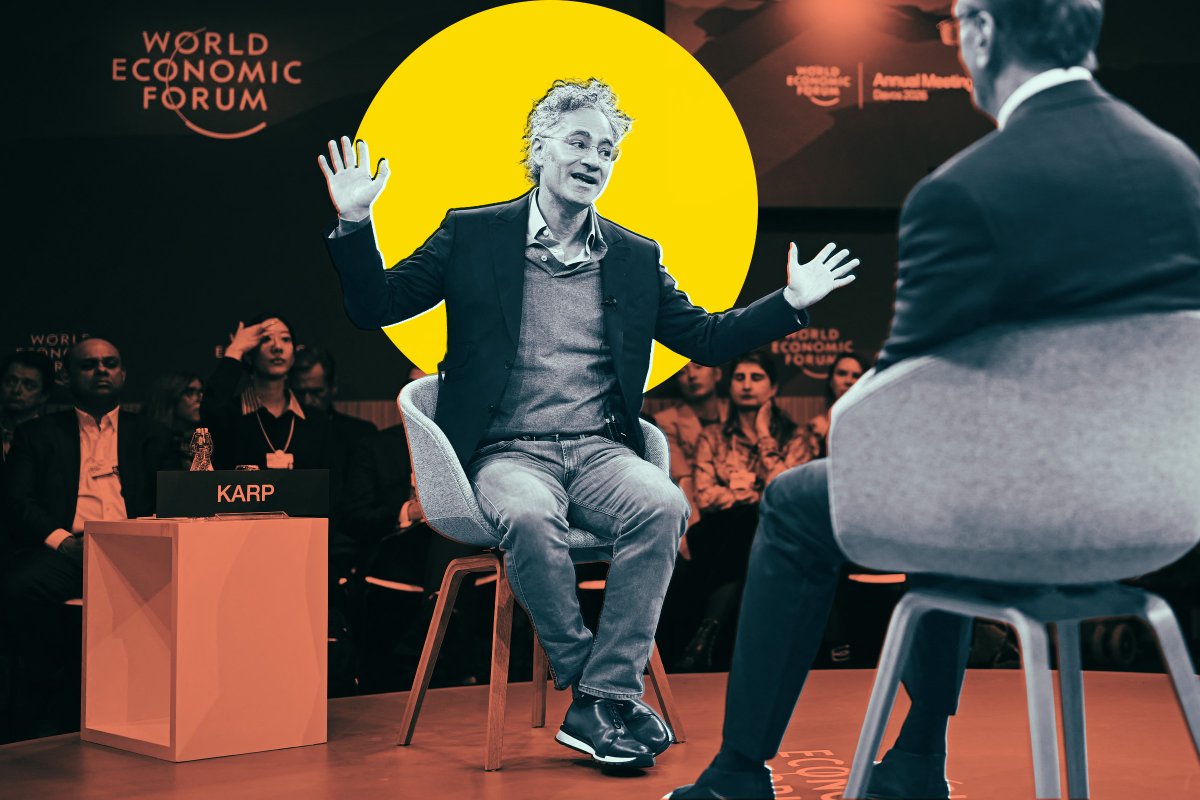
Wondering what your career looks like in our increasingly uncertain, AI-powered future? According to Palantir CEO Alex Karp, it’s going to involve less of the comfortable office work to which most people aspire, a more old fashioned grunt work with your hands.
Speaking at the World Economic Forum yesterday, Karp insisted that the future of work is vocational — not just for those already in manufacturing and the skilled trades, but for the majority of humanity.
In the age of AI, Karp told attendees at a forum, a strong formal education in any of the humanities will soon spell certain doom.
“You went to an elite school, and you studied philosophy; hopefully you have some other skill,” he warned, adding that AI “will destroy humanities jobs.”
Karp, who himself holds humanities degrees from the elite liberal arts institutions of Haverford College and Stanford Law, will presumably be alright. With a net worth of $15.5 billion — well within the top 0.1 percent of global wealth owners — the Palantir CEO has enough money and power to live like a feudal lord (and that’s before AI even takes over.)
The rest of us, he indicates, will be stuck on the assembly line, building whatever the tech companies require.
“If you’re a vocational technician, or like, we’re building batteries for a battery company… now you’re very valuable, if not irreplaceable,” Karp insisted. “I mean, y’know, not to divert to my usual political screeds, but there will be more than enough jobs for the citizens of your nation, especially those with vocational training.”
Now, there’s nothing wrong with vocational work or manufacturing. The global economy runs on these jobs. But in a theoretical world so fundamentally transformed by AI that intellectual labor essentially ceases to exist, it’s telling that tech billionaires like Karp see the rest of humanity as their worker bees.
It seems that the AI revolution never seems to threaten those who stand to profit the most from it — just the 99.9 percent of us building their batteries.
Hating on the humanities has been a talking point of the right wing for a long time, specifically because the empathy it nurtures leads to solidarity instead of survival of the fittest mentality. They say that these studies are useless to society, while capitalists are the only class that truly sits on top of society and leeches off of it
That’s because they don’t believe in intrinsic value. They don’t believe human beings are inherently worthy of dignity and respect. They think those are things that have to be earned, and earned at the expense of others at that. They think dignity comes from being exalted above others, so they push others down while scrambling to boost themselves up.
They don’t want to live in a world where everyone is equally dignified. To them, if they have no one to look down on, they feel they themselves are a diminished thereby. It goes all the way down the social ladder. Even the lowest hick in the trailer park finds someone on TV in a more wretched condition than themselves, so that they can feel lofty.
They view life as a zero sum game, and the only measurement of value or worth that they recognize is monetary. It’s to the point where you can’t even talk to them about intrinsic value, because they’ll think you’re talking about finances.
That’s why they think financial oligarchs are kings. They view them as “winners” at life, as if they got there by hard work, diligence, and other platitudes, rather than by stealing the value of the labor and innovation of the people subject to them and siphoning and hoarding the wealth of society.
It’s why they don’t believe in taxing the rich to fund the welfare state. They don’t view people at the “bottom” of the social hierarchy as being worthy of dignity and respect, let alone the care and support of society and civil governance. To them, money is all that’s important, and when they look at a balance sheet, they see anything going to help the poor as a “waste.”
It’s tragic. It could have all been avoided, if we had elected better leaders, if education had been prioritized more by society, particularly liberal arts and the humanities. They don’t generate profit, so the same people view those things as a waste. But how is a society going to raise the next generation of leaders without a strong base in the humanities and liberal arts?