

- cross-posted to:
- retro_gaming@discuss.online
- cross-posted to:
- retro_gaming@discuss.online
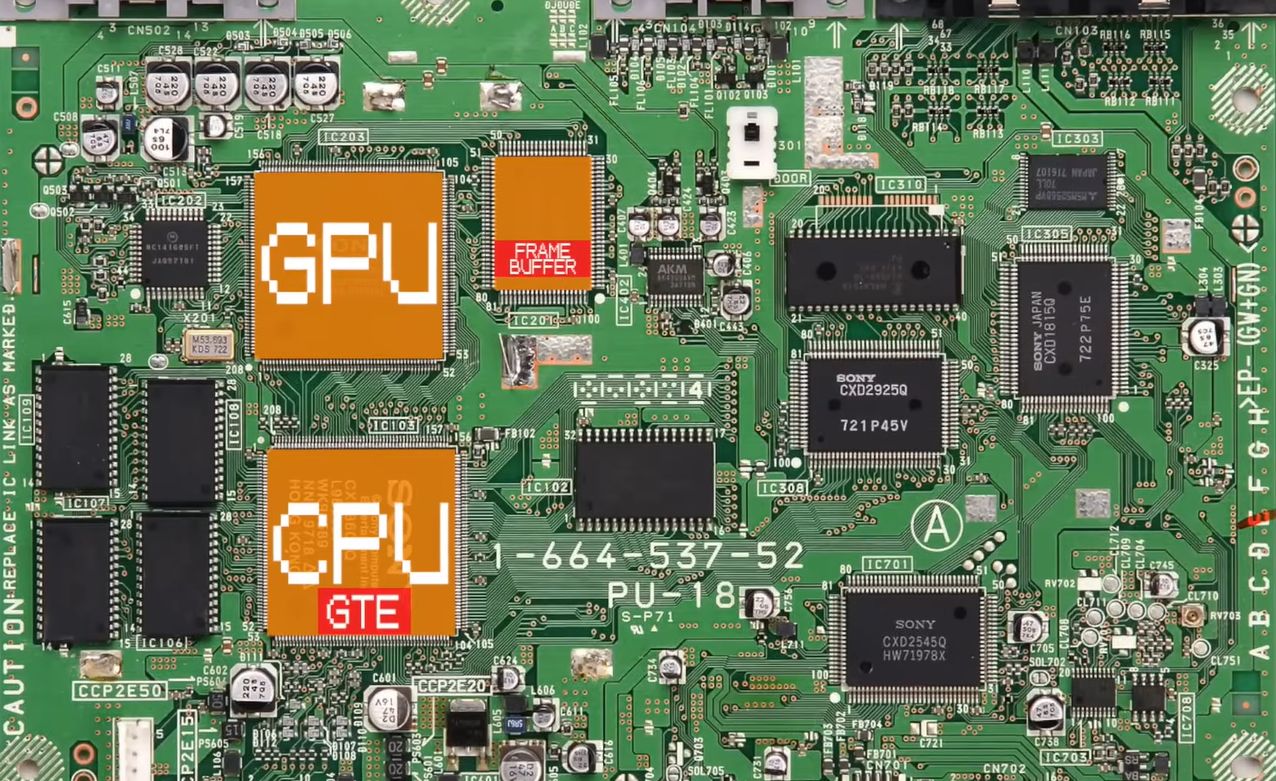
Although often tossed together into a singular ‘retro game’ aesthetic, the first game consoles that focused on 3D graphics like the Nintendo 64 and Sony PlayStation featured very distinct visuals that make these different systems easy to distinguish. Yet whereas the N64 mostly suffered from a small texture buffer, the PS’s weak graphics hardware necessitated compromises that led to the highly defining jittery and wobbly PlayStation graphics. …
3D graphics were incredibly primitive back then. There really weren’t “3D processors” as we know them today.
On top of that, CRTs masked many of the weirdest graphical artifacts - the shimmering we see on modern screens was much more of a blur on screens at the time.
It’s fun to look back at the PlayStation and the N64, and to see how each of them handled limitations in a different way.
This Noodle video on how old games were developed with CRT in mind was absolutely mind-blowing to me.
Yeah, for example when emulating GB/GBC/GBA games, simulating the slow LCD response time makes all the difference. Jittery shaking animations become soft blurs, and everything feels much closer to the authentic hardware
Resident evil for N64 is mind boggling how they were able to shrink it down enough to fit on that tiny rom chip.
They were definitely 3d processors.
Just tell us all you suck at math.
CRT didn’t mask anything. They had significantly different gamma. That’s the biggest difference, maybe. They also had amazing GtG response times(grey to grey). Modern displays just can’t do that. Plasma TVs were the best. They accomplished temporal dithering. The display itself wasn’t high color. But it switched at extremely high frequency and accomplished the highest color fidelity known to man.
Pixels on a CRT aren‘t quadratic. Light bleeds between them, and persisted between frames. That was definitely some kind of post processing you could call masking and the games of that era leaned heavily into it. Hardware and games were designed to be displayed on a CRT.
You’re quadratic.
Crts don’t have pixels. They have scan lines. They have signals. They’re analog. Not digital.
I used to play around with this stuff. some decades ago.
They had much different gamma ramps. Things that look dull on lcds pop on crts.
CRTs don’t „have“ pixels, but they display a signals that originated from a pixelised source. Popping colors and different gamma curves is not a contradiction to what I said.
Thanks botty mcbotface.
You must be real fun at parties.
You’re welcome
This reads like someone who was born after the CRT era trying to describe them. No, you’re just wrong about that. CRT monitors had a huge effect on the output of the visuals in contrast with modern screens.
Removed by mod
Were you hoping for a forum where people didn’t call you out on your nonsense?
Hey now, I’m enjoying his nonsense. It’s fun to see what holes people dig themselves into.
I’m not sure how to reply to this.
Mainly because my own math skill is unrelated to processor technology of the late 1990s.