
6·
4 days agoNeat, thanks!
I take my shitposts very seriously.
Neat, thanks!
So what’s the current state of emulation on Linux? I still have both Yuzu and Ryujinx installed, but has either been superseded by a fork?
Not, it isn’t. It was most likely a spam filter. Images and longer messages work fine.
“But they did it too!” will not fly with me as a valid defense coming from an adult person. Your behaviour is your own responsibility. If you disagree with something, either respond in a polite manner or downvote and move on. Do not accuse others, either individuals or groups, of having a mental deficiency, brain damage, or aberration; and the fact that you would try to minimize what you said shows that you understand why I have an issue with it.
Be nice, or leave.
You don’t get to speculate about that. Now drop it.
If you have a problem with any particular system, express it in a way that doesn’t denigrate its users. Some people prefer it. Some don’t have a choice.
And NEVER call anyone brain-damaged for any reason.

to bypass the guardrails the company had created
What a delightful way to say that those guardrails were worth, in effect, fuck all.
We’re adding new, different symbols to the confusing mess of old symbols and keeping both? Neat!
The original creator of Wordpress and the owner of a Wordpress hosting site. He’s been having a meltdown for months because Wordpress is being used by WP Engine, a for-profit competitor hosting company, in compliance with the license. Since then, he has:
Please don’t, this is the best entertainment I’ve had in months!

Yes, it’s best to store them on a separate hard drive. The target partition must be formatted as a Linux filesystem (ext2/3/4 or btrfs) in order to retain file ownership and permissions. I have a 512 GB partition on a hard drive reserved for the last three weekly backups and never ran out of space.
Ext4 is still perfectly fine. It’s a mature technology, and much more stable than btrfs. Your experience will not be any different because of this.
I still recommend using Timeshift. The only downside is that only the Rsync backup method will be available, which creates a full on-disk copy of your system files.
we might be a little too passionate
We have to offset the complacency and downright apathy of Windows users, and the tribal/cult mentality of Apple consumers.
Bootloader no worky can be caused by a hundred different issues. The installer may have removed the kernel or a CPIO archive (initramfs or processor microcode) that the bootloader needs. You could be missing some EFI program. If the boot entry is set to identify the root filesystem by its UUID, formatting/reinstalling would have changed the real UUID and then the bootloader wouldn’t be able to find it. Maybe installing the OS simply wiped or damaged that partition.
If you have to reinstall the OS, you should also reinstall the bootloader (the OS installer usually lets you do that from the GUI), or if you’re confident, update the boot entries to reflect the state of the computer. I strongly recommend using btrfs as your root filesystem instead of ext4, and use Timeshift to set up regular snapshots (btrfs) or backup clones (ext4) in case this happens again.
I’m willing to bet that 95% of Wordpress users just want a one-click solution to their non-technical needs and don’t give one shit about “innovation”. Otherwise they wouldn’t be using Wordpress.
While I wouldn’t accuse him of having the intelligence to make a “calculated move” – he has an extensive history of making decisions based on how it might make him look in the eyes of his suckers naive gamers. If you remember the beginning of his beef with Google and Apple – Epic prepared an entire 80-page lawsuit and an animated short film before intentionally breaking ToS, positioning themselves as the messiah that will save the gamers from the evil corporations.
He obviously has something to gain from voicing a dissenting opinion. Remain skeptical, question everything.
The owner once said they were not a meme community in a post. Empirical evidence disagrees.
No porn, please. Even if the stack smashing happens out-of-frame.
Keep it polite, folks. No personal attacks against others, especially speculations regarding mental or emotional capabilities.

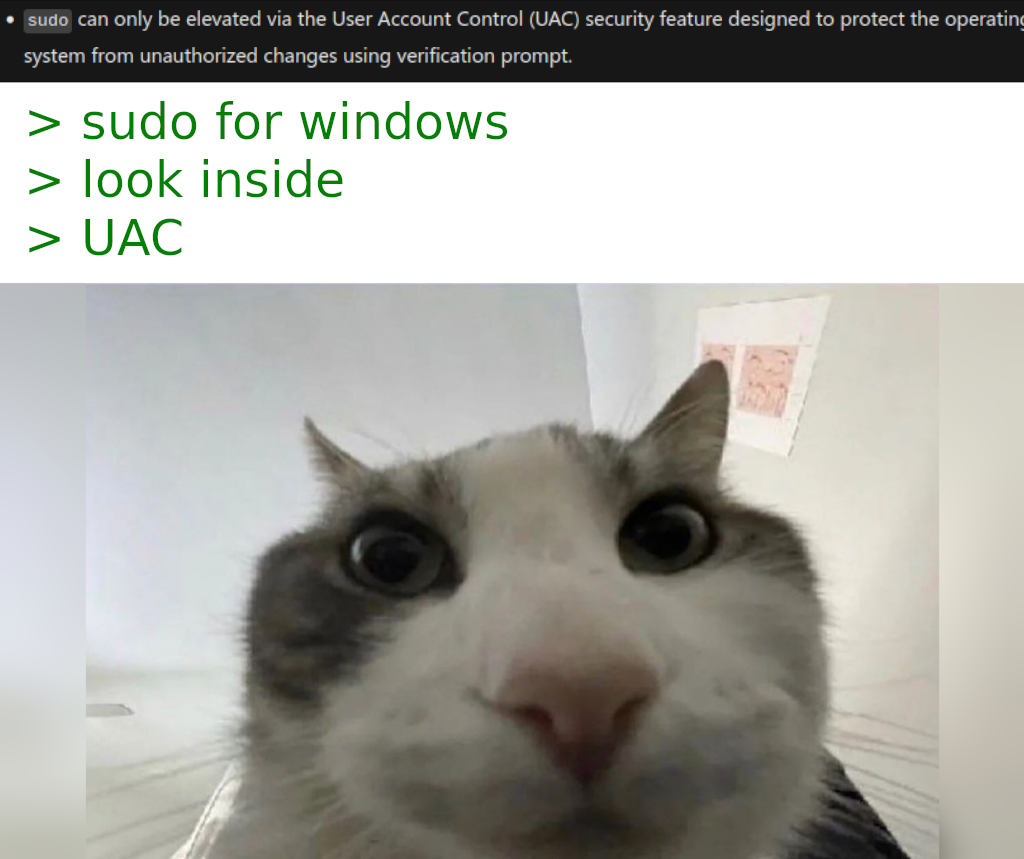
2-3 years ago, an update to GRUB completely fucked the bootloader on Arch systems. I remember it well because it was the only time I was thankful for choosing Manjaro (which receives updates on a delayed schedule).
(edit) Found it! https://archlinux.org/news/grub-bootloader-upgrade-and-configuration-incompatibilities/ A breaking change in the GRUB configuration caused systems to become unbootable. Manual intervention was required to regenerate the config files (I think it was supposed to be handled by a pacman hook but can’t be sure).