

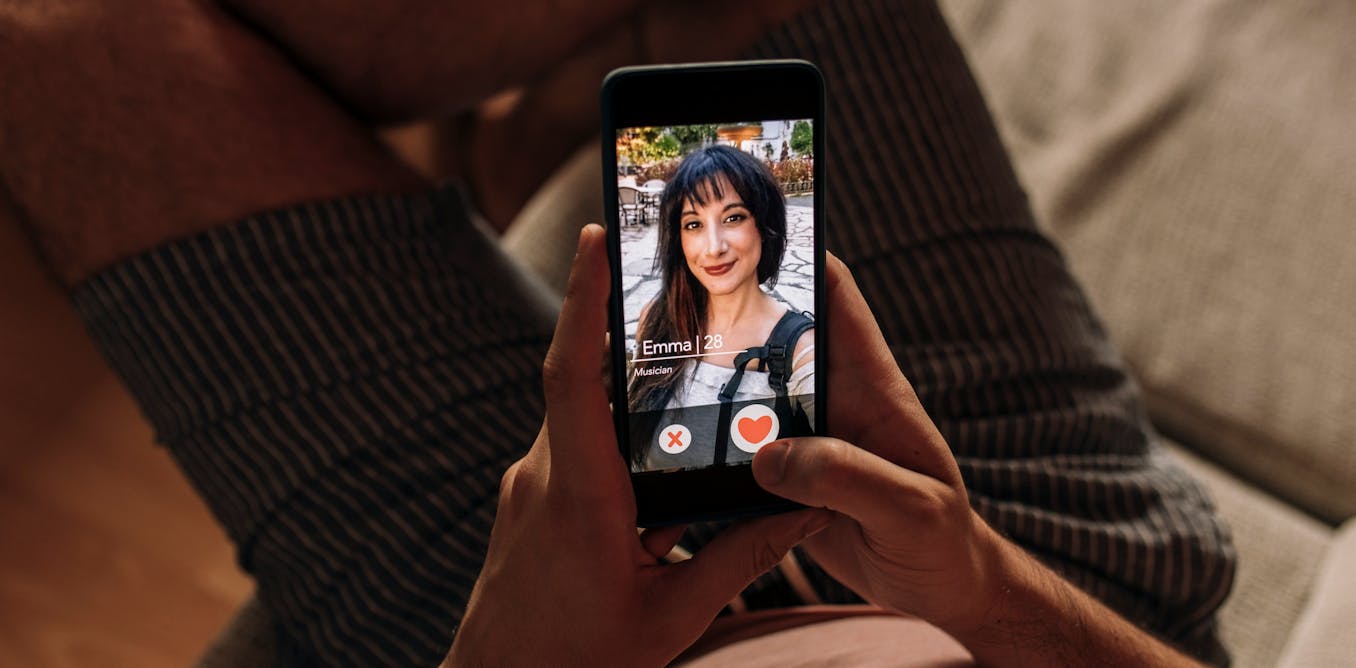
In the weeks leading up to Valentine’s Day, dating apps typically see a spike in new users and activity. More profiles are created, more messages sent, more swipes logged.
Dating platforms market themselves as modern technological solutions to loneliness, right at your fingertips. And yet, for many people, the day meant to celebrate romantic connection feels lonelier than ever.
This, rather than a personal failure or the reality of modern romance, is the outcome of how dating apps are designed and of the economic logic that governs them.
These digital tools aren’t simply interfaces that facilitate connection. The ease and expansiveness of online dating have commodified social bonds, eroded meaningful interactions and created a type of dating throw-away culture, encouraging a sense of disposability and distorting decision-making.
One problem is users are selfish idiots. They won’t go somewhere that doesn’t already have a lot of users. They don’t care that going there now moves it closer to having a lot of users, so in a few months it’ll be good and vibrant. Most people can’t even think an hour ahead.
Another problem is that there are many scammers and bad actors. You need to deal with them, and convince your real users that the scammers are dealt with.
Lastly, in this capitalist hellscape everything is expensive. How are you going to run a big service that’s got low latency and high quality?
Good questions.
That first one’s a real head-scratcher: who would ever want to be the very first member on a dating app? I hear Tinder had “launch parties” but then I’m sure they had about 100% more funding that I do (which is none). In fact, what even is the smallest useful density of users? It’s obviously quite varied across geography, it won’t matter if there are 100.000 real people if they’re all in Belgium (sorry, Belgium).
One approach to lessen scammers is to require phone numbers rather than email addresses, and yes I’m aware that “lessen” does not equate “fix” – not by a long shot. There’s plans for supporting national eID’s of various target countries, but that should/will be a voluntary thing for users, but not every nation has a solution that “random apps” can build an integration with. Another remedy, I’m afraid to say, is to have no free tier - in fact my plan is to have only a paid tier, but also only one paid tier (reasonably priced, even) so everyone get’s access to everything on a level playing field. Then peer review and moderation (if people can be made to be arsed about it).
Lastly, one way to answer that is the wry practical perspective of (a) having few users (in the beginning at least), (b) don’t aim globally, © efficient data schema, (d) offer relatively low-res photos (eg. 800px should be “good enough” for a 3-inch-wide display), plus a bunch of other practicalities. Seriously, you don’t need “real time”, if you can’t be patient enough to wait for ¼ second between swipes, you’re probably not going to be a fun date anyhow. The real selling point is the features, not the performance.
«Dating apps don’t sell love. They sell the feeling that it is one premium upgrade away.» is exactly the sentiment I want to combat. If the user can trust that there isn’t “just one more payment” holding them back, what might they truly want out of a dating app? I’m guessing one thing is “honesty”.