

- cross-posted to:
- pcmasterrace@lemmy.world
- cross-posted to:
- pcmasterrace@lemmy.world
You must log in or # to comment.
XDA dev articles are complete trash
Wait until he finds out what fast startup is
That was a long article to essentially say there isn’t a problem.
I read tech article the other day where the engineer had made several LLM calls and over engineered controlling a smart home light. Then wrote a massive corporate ridden psychoses article about it like he was delivering the word of God.
I can’t remember what company had posted it. One of the search vendors I think but it was not cool. It’s like everyone got laid off and the only people left is some execs nephew that’s “good at computers”.
Man discovers feature that has been around since Windows Vista, and decides to write a ragebait article about 20 year old technology.
To be fair, windows hibernates a lot without telling the user (hibernates when shutting down, hibernates after sleeping too long). Hibernating when shutting down was largely meant to help with slow boot times on HDDs, and it maybe shouldn’t be default now that everyone is on SSDs that both boot faster and receive more wear from hibernating.
All my homies disable hibernate.
It’s shut down or nothin’
Hibernation on laptops helps preserve standby battery life, and I personally appreciate it as I may close my laptop lid and forget about it for a week.
Yeah well “Shut Down” doesn’t need to be an alias to Hibernate, which it has been since vista
Oh yeah 100% agreed on that one, “hibernate” should definitely be in the “sleep” category.
The idea that hibernation is going to cause substantial SSD wear is ludicrous on all but the smallest SSDs in systems with large amounts of RAM.
Hibernation is only going to be saving ram in memory, so for most consumer systems 8, 16 or 32GB. Most SSDs nowadays are rated for hundreds to thousands of terabytes written as an effective life so you would need to hibernate hundreds of thousands of times. Even an aggressively low lifespan drive like a 256GB with ~500TBW would last over 18,000 full 32GB writes. Let’s pretend you hibernate four times a day every day, every year. 365*4 = 1460 hibernations per year. 18,000/1460 = 12.32 years. Long past the lifespan of a computer. No spinning disk is likely to survive this long either.
They even call it out in their article with their own math of twice a year and come up with 25 years of life. Just not something to worry about, at all, for almost any practical use case.
12 years is beyond the lifetime of a computer?
looks at my 13-year-old PC w/ original hard drive still going strong
My oldest SDD is still at like 85% health and it’s almost 15 years old O:
Shoot, my VR machine is about 13 years old with original CPU, RAM, and HDD! It has my old SSD now and a newer video card (2070) so it can play rhythm games at 90-120FPS.
My oldest working (working for tasks I’d actually use a computer for, not retro fun) computer is 15 years old! MacBook Pro. I need to get Linux installed on it. That’s a project for… eventually.
Mine is 17 years old and is still over-specced because I use Linux and bought it with 16GB RAM then. And it is the second PC I ever bought, my first one was an Pentium-class PC (actually AMD K6@300MHz) that I bought in 1998.
I have a pile of spinning disks that were online for less than ten years under low usage load that failed. I have bins and bins full of them at work with enterprise drives too.
I have personally had a single ssd fail in 15 years, it was an SX6000 that died from controller issues. My first ones were 64GB ones back in the infancy of SSDs. The controllers have come a long way and speeds are now 10-100x faster and much more reliable. Never, ever had one go bad from TBW personally or professionally. I’ve never even met someone who has gotten that to happen, the controllers usually go long before the NAND.
12 years is still beyond the lifetime of a typical computer. Even if you do not have component failures you start spending more money on power to run these things than it would cost to replace them with faster, larger capacity newer systems that use less energy for more oompf. Only people with free or nearly free power are immune to this which is not common.
I’m not saying just throw out all the old systems though, but most people aren’t gonna limp along on a 12 year old system as their daily driver. It might be ok for basic web browsing, word processing and email… but not much more than that. If it’s a laptop it’s gonna be dog slow.
A mid-range PC (i5 4590 + 750ti) from 2014 would be a perfectly fine computer to use even today, and probably wouldn’t draw all that much more power than a modern PC either. Things last longer now that hardware advancements are slowing down. You’d have to use Windows 10 LTSC though because driver support for Linux has been discontinued, lol.
it usually depends on context of how the computer is being used, but usually speaking, the major OS companies invalidate older hardware.
intels 7700k(2017) and older are invalidated for W11 usage and W10 is on life support now for security. Apple is approaching the time period where its about to sunset intel based macbook/mac mini/imac/mac pro support.
in the context of mainstream general computers, 12 years is a LONG time. its also around the cutoff for whats worth selling vs whats worth recycling at my workplace.
W11 is also on life support
so is W12…
It just seems someone doesn’t know the difference between hibernate and suspend and is finding out that one writes to the disk.
It’s probably just for awareness of non-tech-enough users.
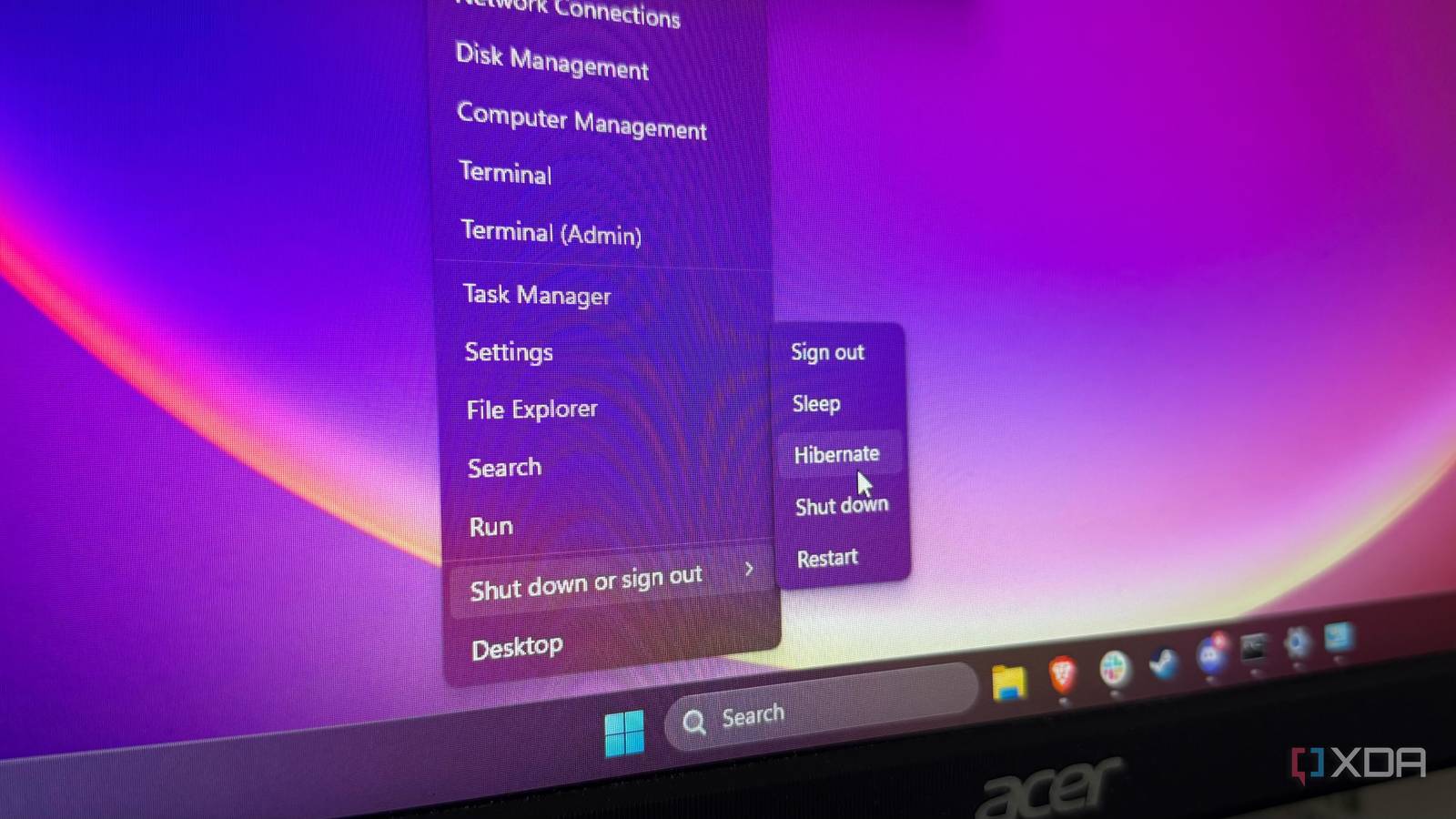
That’s what this article was about actually. Explaining hibernate, the consequences, giving a realistic impact of using it, explaining sleep and the benefits.
Always give your computer 8 hours sleep per night to keep it healthy
This is clickbait. Having hibernation and writing 32GB of RAM to the SSD are not “Windows 11”, but standard behavior on any OS with hibernation.
In my experience, the fragility and unreliably of M.2 and SSD has been greatly overstated.
Windows could be considered uniquely responsible here since on a desktop you might think you’re safe from this if you always shut it down properly after use. Yet “fast startup” is a thing. It’s a questionable default that should be revisited.
the culprit is actually probably “fast startup” which writes a hibernate file every shutdown. every “normal” ‘shutdown’… close programs, logoff, hibernate, power off. this feature is unnecessary on systems with ssd but it continues to be enabled by default. it was created in the days of old to make hdd systems appear to boot up faster by not actually starting up windows on every power on.
hibernate isn’t enabled by default.
the other writer of hibernate data, hybrid sleep, doesn’t even exist on a newer system that uses ‘modern standby’… but is enabled by default on desktops that do not.
Might explain why, for like a decade now, my computer will never stay asleep or in hibernation or whatever the hell. Always just wakes up by itself. Luckily SSDs are so fast that I just turn the thing off when I’m not using it now, but it’s still annoying.
No, that’s a different shit feature MS shoved in Windows. They disabled S3 sleep and replaced it with S0 “Modern Standby”. Search around, it’s posdible to force the old S3 real sleep mode I think.
nope, modern systems with s0ix usually has s3 support removed in the firmware sadly
Lid closed sensor thought the laptop was open for One (1) millisecond.
Hibernation technically does this to any SSD. It’s not just Windows 11.
Writing the entire contents of RAM to disk increases the wear on the SSD. The risk goes up if your SSD is nearly full and wear-levelling has to move more data around: https://en.wikipedia.org/wiki/Write_amplification#Wear_leveling
Yeah especially if you have a titchy laptop with 256GB SSD and 32GB RAM… that’s a huge relative percentage of storage wasted on a hiberfil.
I use Linux now, but when I did use Windows, I always turned off hibernate. It had it’s time in WinXP or 95 era, when hard drives took so long to spin up that you could leave and make a whole coffee and it would almost be done by the time you get back. We don’t need it anymore!
Thai is rather different from how Sleep works
No, that’s (proofread anyone?) one of three modes: to disk, to RAM, hybrid.
I wonder if sleep has much of an effect if any
Normally sleep wouldn’t affect it, because it just keeps the ram powered and doesn’t write to the SSD.
However I think windows will quietly hibernate if the computer has been asleep too long. At least on laptops it will automatically hibernate after a few hours of sleep, or after a % of battery is used.
‘hybrid sleep’ does write the hibernate file before going into ‘sleep mode’. if you have an older system or one that doesn’t use ‘modern standby’ and you have an ssd, you might want to double-check that setting in your power scheme advanced settings.